
Currently reading
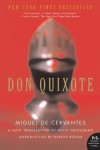
Don Quixote
Holy Bible: Revised Standard Version
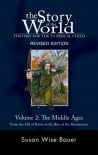
The Middle Ages: From the Fall of Rome to the Rise of the Renaissance

Final Harvest: Poems

The Making of a Poem: A Norton Anthology of Poetic Forms

Tales from the Tao: The Wisdom of the Taoist Masters

The Emperor of Nihon-Ja: Book Ten (Ranger's Apprentice)


 The rapidly changing POV confused my children. It might be better for a child to read it to himself so he can see the line breaks.
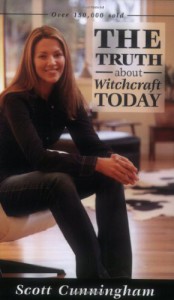 3.5 stars A little too defensive. I understand the desire/need to address common misconceptions that are spread either maliciously or out of ignorance, but perhaps some other format for that address would sound more like an intelligent rebuttal and less like a whiny "So there!"
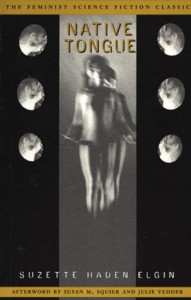 The prose is rough. It needs to be tightened up all the way through, and if I were being reasonable, I might admit that the men are a little *too* evil. (But who wants to be reasonable?) The idea is entertaining, and the linguistics throughout is great - interesting and fun.
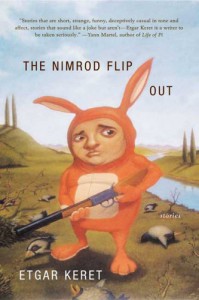 Some really good, imaginative and well-told stories, like moon people who create tangible thoughts with determined shapes. There were also some uninteresting, boring stories, like a dog that keeps coming home. I've been singing "The Cat Came Back" since kindergarten. Turning the cat into a dog and telling the story in prose isn't different enough to be interesting. Other "stories" seemed more like plotless character sketches. Overall - short, simple, fun stories.
 After I buy a deep freezer, a vegetable slicer, a food processor, a vacuum sealer, a newspaper subscription, a Sam's Club membership and a bunch of jars and baggies I can start saving money on food.
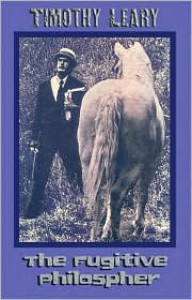 Excerpts from several books arranged chronologically to create an autobiography. Fun, boring, silly, interesting. Warning: This book is in great need of a copyeditor.
 There is a lot more going on in this novel than a simple "Catholics bad. Pagans good." theme that seems to offend readers so much that they miss everything else. Some subjects found in this story:
letting go - of children as they grow up and of loved ones who die
moving on - from bad relationships and harmful habits
nature/nurture
facing your fears
loving friends/family/strangers for who they are
the assumptions people make about each other
the right to die
heeding your own advice
tolerance/eradicating temptation
classism
feeling powerless
wanting to control people "for their own good"/letting people make their own decisions even when you disagree
Also, the priest in the book isn't so simple and evil as people want to believe. He suffers moments of doubt that his way is the best. I don't mean doubts about his faith/religion, but doubts about how he's decided to lead the members of his church and community. (Is religious tolerance really a slippery slope that they can't handle?)
Furthermore, he struggles with the desire to be moral and create what he considers the best environment for the members of his church and his belief that he'll have to do something immoral to rid the city of the temptation he feels the members of his church are too weak to handle. Should he let them fall into sin, lose faith and suffer damnation, or sacrifice his own morality to save theirs? If this were such an easy decision for him, as it would be if he were simply evil, he would do something awful right away and we'd have a completely different novel.
 In this book, Paulsen(author of [b:Hatchet|50|Hatchet (Brian's Saga, #1)|Gary Paulsen|http://d.gr-assets.com/books/1347443751s/50.jpg|1158125]) tells us about his experiences with animals, mainly dogs, and what he has learned from them. The last 40 pages describe his first Iditarod. There is no spectacular prose here, but the stories are interesting, funny, touching or have you grimacing at Paulsen's pain as a dog bites his knee or he is dragged behind his sled with his head slamming into boulders. It's a quick, fun read, and you see just how smart and funny dogs can be.
 This motivational book compares the current system of math education to teaching art by starting with memorizing brush types and sizes and ending up with paint-by-number in high school. He says that while we are taught mechanical aspects of math (memorizing facts and formulas:memorizing brush types and sizes), not only are we never taught what mathematics really is, but we aren't aware that what we are learning isn't truly mathematics: it isn't what mathematicians do. So, we graduate high school having never learned math, but thinking we have. He gives a few examples of the process of the imaginative exploration that is math and encourages the reader to go play with numbers. I would have appreciated a "further reading" list and a list of starter questions that a teacher could pose to his students while he is getting started on his journey of playing with numbers.
 This was a fun and fluffy book - part memoir, part history, part art. It talks about the author's experience diagramming sentences (which she considered a fun part of the school day) and her job as an editor. She talks about the history of sentence diagramming and what some writers (I can only remember Gertrude Stein) have said about grammar and sentence diagramming and whether or not it was likely that this or that author had learned it in school (based on years of popularity of diagramming and years the author was in grammar school). While she considers sentence diagramming a fun and worthwhile task, her opinion, and the seemingly unanimous opinion of the people whose opinions she reports, is that learning to diagram sentences does not improve your writing. Also, homeschoolers are mentioned as the main people who you'll find online talking about sentence diagramming. (Yay us!) The book is full of diagrammed sentences, some of them quite complex and lengthy.
 Where the Wild Things Are for adults. Kurtz went to the jungle where the natives "roared their terrible roars and gnashed their terrible teeth and rolled their terrible eyes and showed their terrible claws" until Kurtz "tamed them with [his] magic trick" and they "made him king of all wild things." Then Marlow shows up to witness the effects of the wild rumpus. Unfortunately for Kurtz, this story does not end with a hot supper.
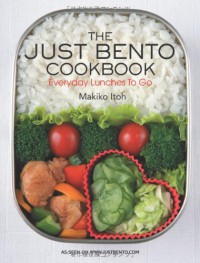 Not just great for bento box users. I have increased amounts to make family meals and stocked my fridge with lunches we can eat cold or reheat. This would also be good food for a picnic.
Recipes are not too complicated and don't require too many ingredients. I did have to buy some sake and mirin, but at least I have used them over and over. I didn't have to buy a bottle of mirin just to put one tablespoon in one recipe and then have the almost-full bottle sitting around my kitchen wondering what to do with itself.
 Honestly, there's just too much here I don't understand. And Russian history is not high on my list of topics to study - not because it's unworthy of study, of course. It's too far removed from my own life and is not often referenced and alluded to in most of what I read. Anyway, it would take a lot of time and effort - researching reference after reference and allusion after allusion - for me to really understand these poems. What more, Akhmatova admits "Poem Without a Hero" is difficult for people to understand when she says, "I frequently hear of certain absurd interpretations of Poem Without a Hero. And I have been advised to make it clearer." This she declined to do, so I don't feel too bad saying I find parts of it unclear and difficult to understand.
Regardless, some of the beauty of these poems is apparent. Some of the content is explained well enough in the introduction, and some ideas provoke emotion because they are universal. For instance, I think we can all understand and respond to the lines (from "Poem Without a Hero"):
As in the gut of the dolphin
I saved myself from the shark
Even if our dolphin is not her dolphin, and our shark is not her shark, we all have our own sharks and dolphins. And these lines from "Requiem" are clear, haunting and transportive.
There I learned how faces fall apart,
How fear looks out from under the eyelids,
How deep are the hieroglyphics
Cut by suffering on people's cheeks.
Like the hieroglyphics on the cheeks of the suffering, her words leave their mark on the reader.
 Ender's Game is like Family Guy, but dramatic and SF. Okay, the two are not much alike, but there is one trick the two have in common.
 In Family Guy, we know Brian is a dog. We can see that he is furry and has a tail. However, he is so much like a human - he is bipedal, speaks English, dates human women, etc. - that it's easy to cast him as just a furry human. Then all of a sudden he starts chasing his tail or playing fetch, and we think, "Oh yeah! 'Cause he's actually a dog. HA!"
What's comedic in Family Guy is heartbreaking in Ender's Game. Ender and his peers are intelligent, learned and precocious, and their situations are those in which we would only place adults. As we're reading, it's easy to cast the characters as equal to young adults or just guys who take the opportunity to act a little less mature without many women around. Their actual age becomes unimportant to the story. But then they do something age appropriate - like cry themselves to sleep - and it hits you, "Oh yeah. 'Cause they're actually kids. God, that's awful." And you just want to go hug your own child and tell him to never join the army because killing is bad, and dying is worse.